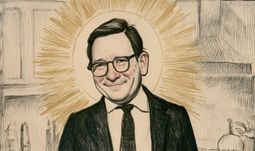
Morning Coffee: The critical questions at multistrategy hedge fund interviews. The sweaty summer of jobless millionaires from financial services

If you get a job with a major multistrategy hedge fund, you might receive a large bag of money. Millennium has been known to pay $100m for people it finds appealing. Balyasny has been known to spend $50m+. It's not as much as Mark Zuckerberg's generosity to the people he's hiring for Meta's special AI team, but it's not bad either.
Get Morning Coffee ☕ in your inbox. Sign up here.
How do you get these jobs at multistrategy hedge funds? Speaking to Bloomberg's Odd Lots podcast, Brian Yelvington, a former portfolio manager turned business development guy at Brevan Howard, turned hedge fund headhunter, explained that it is not easy. There are questions to be answered first.
The foundational question, said Yelvington, is, "What is your edge?" If you're the sort of hedge fund manager who might earn $50m, you'll respond with "an extremely well-defined two or three sentence elevator pitch answer." If you're not, you'll say something like, "I'm just very good at what I do," or, "I have a lot of experience."
Once you're through this thicket, Yelvington echoed Drew Gillanders Citadel's head of international equities in his partiality for asking about drawdowns. "One of the questions I always ask people is tell me about your biggest drawdowns," he said. Drawdowns, which refer to a fund's decline from peak to trough, are not popular in hedge funds and may get you fired. “When we hire, we take a long time to understand how people will react both in a draw-up when they’re making money and in a draw-down, when they’re losing it,” declared Gillanders to students in London last November.
Yelvington said the other areas of interest are the process by which someone selects trades, how they construct a portfolio and their approach to risk. It helps to have a narrative about recent market events. The best portfolio managers know everything about their trades and do all the analytics themselves: they're like athletes watching the tape so that they can learn from their mistakes. The worst presumably just want the $50m.
If you can't be a portfolio manager, maybe you can be a hedge fund analyst? This is a catch-all phrase for someone who doesn't have trading authority but is contributing to trading decisions, Yelvington said. Maybe the questions are less challenging there.
Separately, what do you do after you've stepped down from a three decade career in financial services, latterly at Bank of America, and you have $1.9m in retirement accounts and a net worth of $5m?
Speaking to the Wall Street Journal, Kevin Crain says he spends a lot of time on LinkedIn. He doesn't say that he's retired, but he doesn't have a full-time job. Instead, he's a "senior advisor" to all sorts of places, including the Milken Institute and McKinsey & Co.
Brenda Pitts, former operations and technology professional at Moody's, BNY Mellon and Blackrock, also illumined her situation to the WSJ. 56-year-old Pitts has $2m in savings, but worries about having no money after a difficult childhood. Pitts says she's networking and enjoying the hot summer in New York. She observes that there are a lot of hiring freezes in financial services - "...a lot of people my age have stopped working.”
Meanwhile...
Jane Street suggests the Securities and Exchange Board of India doesn't know what it's talking about. In a memo to staff, Jane Street said SEBI's report was based on "erroneous or unsupported assertions,” that it was only engaged in “basic arbitrage trading”, and that the allegations felt "far from reality." (Financial Times)
Jain Global is one year old and has big aspirations. “Bobby is keen on expanding Jain Global’s team. He is here for the long game. He is planning for decades." (Financial News)
Equities salespeople and traders had a fine second quarter. Coalition Greenwich is projecting a 20%–25% annual increase in their revenues. Fixed income trading is expected to register a more modest 5%–10% growth in the second quarter. Prime broking is hot, so is foreign exchange and interest rate trading. (IFRE)
97% of Abu Dhabi's offices are occupied but many desks are empty. Under ADGM rules, firms must maintain a physical office and employ at least one United Arab Emirates-based person. Entire floors are devoid of people as a result. (Bloomberg)
It won't be easy to find a gentle job now. “They’re testing the limits of what they can ask of their employees, knowing how hungry people are to work, and knowing they’re in the driver’s seat. The pendulum has swung, and companies are in control again.” (WSJ)
Have a confidential story, tip, or comment you’d like to share? Contact: +44 7537 182250 (SMS, Whatsapp or voicemail). Telegram: @SarahButcher. Signal: sarahbutcher.22 Click here to fill in our anonymous form, or email editortips@efinancialcareers.com. Signal also available.
Bear with us if you leave a comment at the bottom of this article: all our comments are moderated by human beings. Sometimes these humans might be asleep, or away from their desks, so it may take a while for your comment to appear. Eventually it will – unless it’s offensive or libellous (in which case it won’t.)